Sunday, May 31, 2026

ROGUE WAVES ARE REAL

 31 May 2026: Summer looms, though the recent weather in the northeast US might cause some confusion about how close the lovely warm weather we look forward to might be! In any case, here's a bit about the phenomenon called "rogue Waves" that some of you might have experienced - fortunately, I have not in spite of many years at sea in different parts of the world. From SupercarBlondie.

                                  ~~~~~~~~~~~~~~~


Sea phenomenon was always believed to be a myth made up by sailors until satellites stunningly proved it to be true

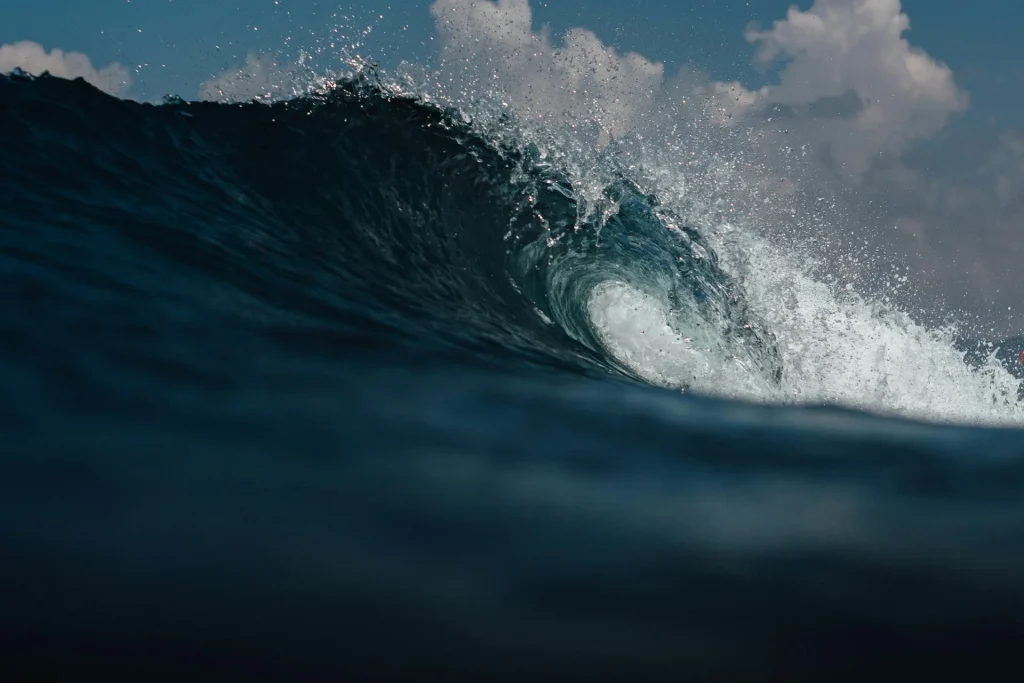
For centuries, sailors told terrifying stories of a sea phenomenon: giant waves appearing out of nowhere, but before satellites stepped in, most scientists dismissed them as exaggerations or an outright myth.

These so-called ‘rogue waves’ sounded too weird to be real, often described as towering walls of water capable of swallowing entire ships.

But thanks to modern satellite technology in space, what was once folklore has now been proven beyond doubt.
 Sea phenomenon was always believed to be a myth made up by sailors until satellites stunningly proved it to be true

And the truth behind these ocean giants is even more mind-blowing than the myths that came before.

Rogue waves were dismissed as myth until science finally caught up

Stories of rogue waves go back hundreds of years, with sailors reporting massive, unpredictable waves rising suddenly in otherwise normal seas.

For a long time, scientists believed ocean waves followed predictable patterns, meaning such extreme outliers simply shouldn’t exist.

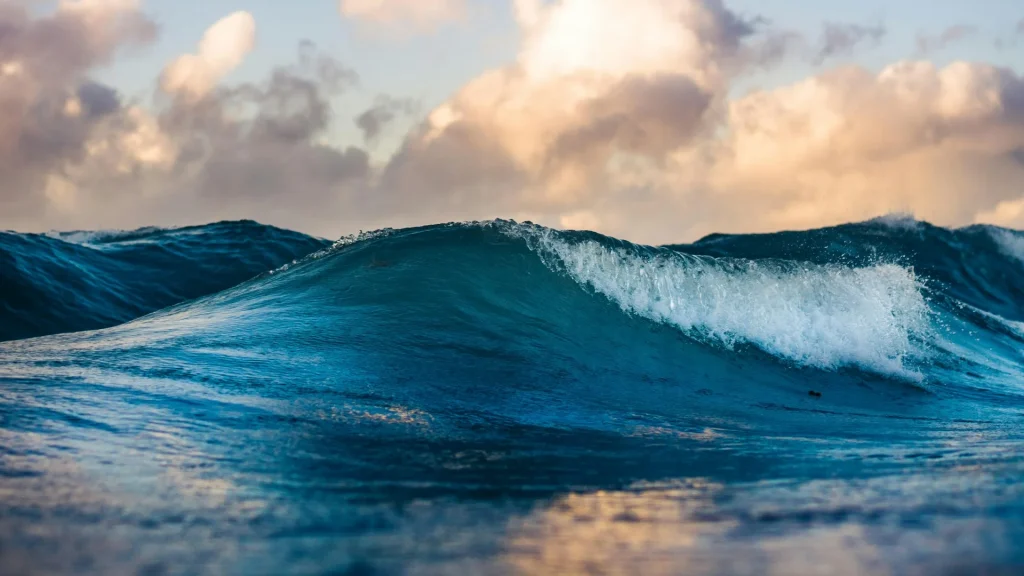
That all changed in 1995, when a massive 80-foot wave struck the Draupner oil platform in the North Sea, becoming the first scientifically recorded rogue wave.
 Sea phenomenon was always believed to be a myth made up by sailors until satellites stunningly proved it to be true

From that moment on, the narrative shifted, and what had once been dismissed as tall tales suddenly had hard data behind it, forcing researchers to rethink everything they knew about ocean behavior.

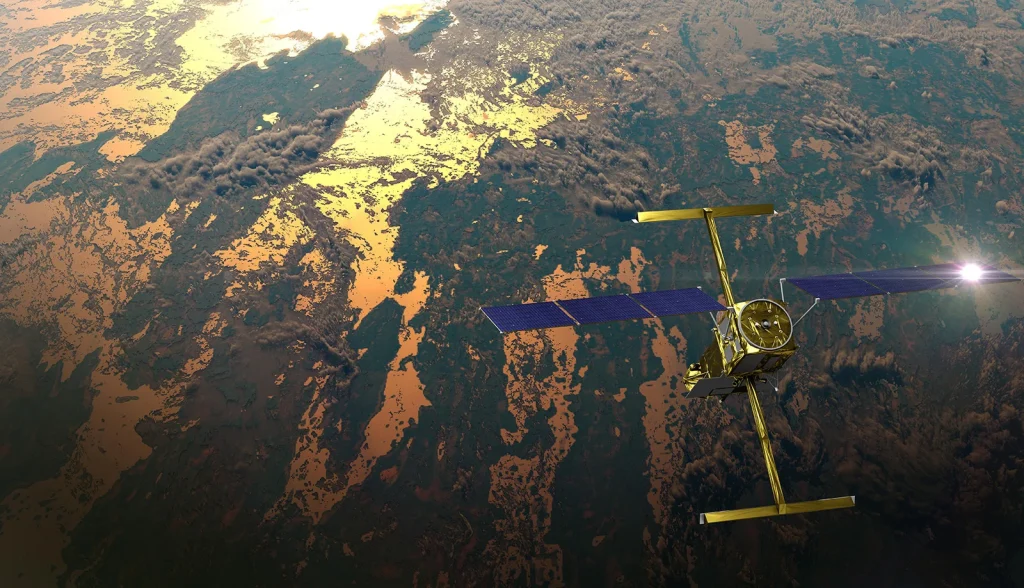
Then came a major breakthrough: satellites.
 Sea phenomenon was always believed to be a myth made up by sailors until satellites stunningly proved it to be true

In the early 2000s, the European Space Agency began tracking ocean surfaces from space, and by 2024, the SWOT satellite had captured waves between 65 and 115 feet tall.

Even more surprising, these waves weren’t always tied to storms; they could appear hundreds or even thousands of miles away from extreme weather, making them far more mysterious and dangerous than anyone expected.

So, how do these ocean monsters come to life?

Scientists now believe rogue waves are created when multiple wave systems combine in just the right way.

One key process is called constructive interference, where waves traveling in different directions and speeds align perfectly, stacking on top of each other to form a single, massive wave.

Another factor involves natural ocean dynamics that stretch and amplify waves, making them steeper and taller while flattening the trough beneath them, and this effect can boost a wave’s height by up to 20 percent.

Researchers analyzing decades of ocean data have found these waves are not as rare as once thought, although they are still considered uncommon and highly unpredictable.

Despite their intimidating size, the chances of encountering one remain low.

But the fact that they exist at all, once written off as tall tales, is a powerful reminder of how much we still have to learn about the ocean.

                                                         ~~~~~~~~~~~~~~~~~~~~

Hard to imagine encountering one  of these monsters out on the deep - even in a large vessel, but I can not comprehend the feeling in even an ocean-going sailing yacht! 

As a matter of interest (mostly to us here at MM) we are only a few readers away from 400,000 readers worldwide. Still difficult to wrap our brain around that!

Until next time, stay safe!

                                     Fair Winds

                                       Old Salt 


Monday, May 18, 2026

AUSTRALIA IS BACK!

 18 May 2026: We have offered several posts recently about the looming (2027) America's Cup competition which will happen off Naples Italy in the summer of 2027. One of the entrants from years past has been conspicuously absent. Well, they're back! From Yachting World...

                                       ~~~~~~~~~~~

Finally after 25 years, Australia is set to return to the America’s Cup

A return to America's Cup racing for Australia – the country that ended 132 years of US American dominance has returned. 


 The rumours that have swirled around the sailing community for months, that there would once again be an Australian entrant to the America’s Cup, seem to have finally been confirmed.

According to an announcement sent to members of Sydney’s Royal Prince Edward Yacht Club (RPEYC), and reports from Australian media outlets, the club has formally entered the 38th America’s Cup, scheduled to take place in Naples, Italy, in 2027.

Team Australia

Details are still a little thin on the ground and we await official confirmation but it looks as though the challenge will be spearheaded by the Winning family, led by John ‘Woody’ Winning and John ‘Herman’ Winning Jr. The family are icons in the Australian sailing and business world; John Winning Jr. is the CEO of Winning Group (and Appliances Online) and a seasoned sailor who skippered the 100-footer Andoo Comanche to a line honours win in the 2022 Rolex Sydney Hobart Race.

Both son and father have also been at the forefront of the Sydney 18ft skiff scene for many years.

The Royal Prince Edward Yacht Club, based in Point Piper, Sydney, will serve as the challenging yacht club. In the letter to members seen by us Commodore Sven Runow says that the challenge is a ‘clear reflection of the strength of our Club’ and aims to place Australia back at the ‘forefront of the international stage.’

The team is expected to compete under the banner of ‘Team Australia’, reviving a name that carries significant weight in the competition’s history.

Australia in the America’s Cup

Australia’s relationship with the Cup is defined by one of the greatest upsets in sporting history, followed by a long, quiet absence.

The country’s first challenger for the Cup came in 1962 with the 12-Metre Gretel, the first challenger to win a race against the Americans in decades. Throughout the ’60s and ’70s, Australian syndicates (notably those led by Sir Frank Packer and later Alan Bond) were persistent challengers, though they again repeatedly fell short against the mighty New York Yacht Club.

The pinnacle of Australian sailing came in 1983. Representing the Royal Perth Yacht Club, John Bertrand’s Australia II – featuring a revolutionary (and top-secret) winged keel designed by Ben Lexcen – defeated the American defender, Dennis Connor’s Liberty. [ed: my wife and son witnessed this upset in the waters off Newport RI. Sadly, due to work requirements, I did not!]

John Bertrand’s Australia II en route to historic victory in the 1983 America’s Cup. Photo: Adam Stoltman / Alamy

 The 4-3 series victory ended the longest winning streak in sports history (132 years). It remains a cultural touchstone in Australia, famous for Prime Minister Bob Hawke’s quote: “Any boss who sacks a worker for not turning up today is a bum.”

Australia hosted the defense in Fremantle in 1987 – often cited as one of the pinnacle AC regattas in history – but the trophy was won back by Dennis Conner and the Americans (inspiring the Hollywood movie Wind). Following that loss, Australian involvement began to wane as the costs of the competition skyrocketed.

It has been 25 years since a formal Australian challenge actually made it to the starting line of an America’s Cup, although Andoo Team Australia fielded AC40 entries in the Youth and Women’s America’s Cup in Barcelona in 2024.

The last official Australian challenge was the ‘Young Australia’ syndicate in the 2000 America’s Cup in Auckland. This may not have been a successful challenge but it did kickstart the illustrious America’s Cup career of then-young skipper, Jimmy Spithill.

Since then, while Australian sailors and designers have featured heavily in the winning teams of the USA, Switzerland, and New Zealand, but there has been no flag-bearing Australian team. However, Australian talent still sits at the very forefront of the professional racing scene and the continuing success of Tom Slingby’s Australian-flagged SailGP team will, presumably, not have gone unnoticed.

                                                    ~~~~~~~~~~~~~

Ok, there you have it! Australia's back in the hunt. Instead of merely supplying talent to other countries (a very sad turn away from the original intent of nationalism in the competition), they will put a boat on the starting line - at least for the elimination races for the Cup. The sailing world will welcome this great turn of events, and perhaps - since America seems unable to do so - maybe even wrest the Cup away from New Zealand! 

Until next time, stay safe!

                          Fair Winds,

                             Old Salt