Saturday, October 18, 2025

ROWING ACROSS THE PACIFIC OCEAN

18 October 2025: 

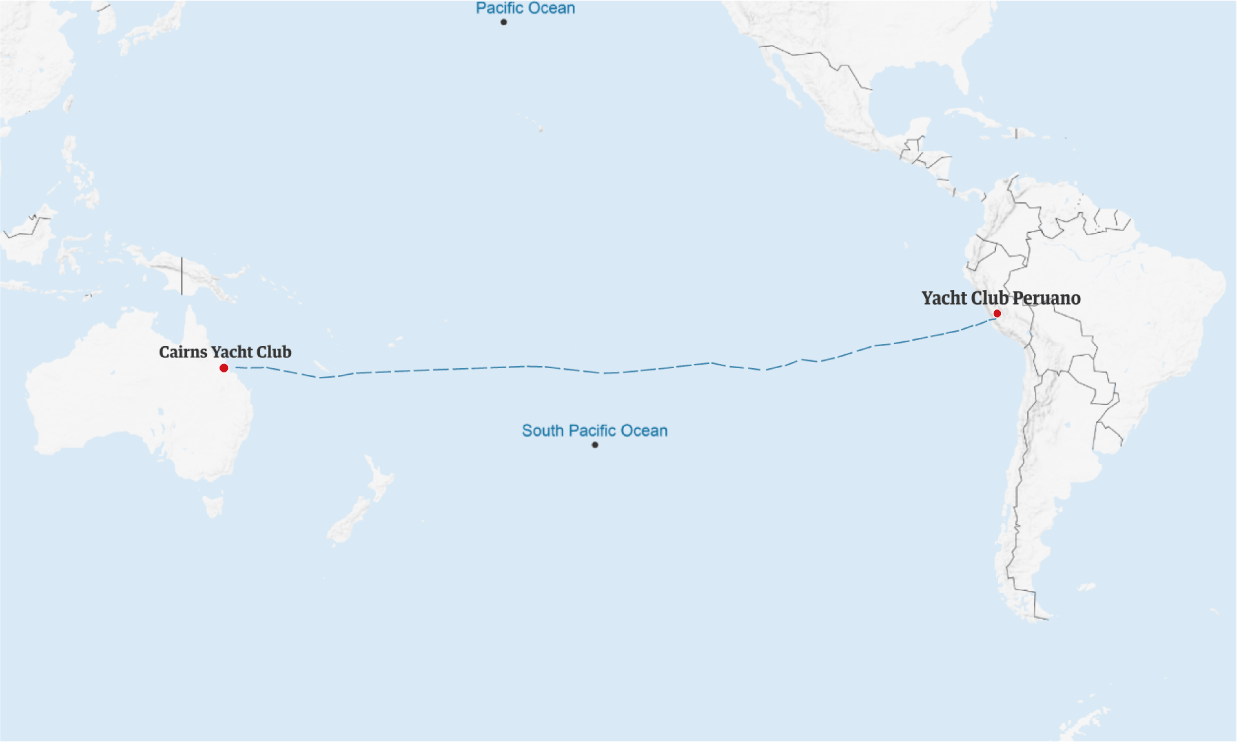
Welcome back to Maritime Maunder. We were planning on a different subject for today's post, but a really monumental event occurred just today which we thought was not only timely, but truly amazing; two women just completed rowing from Peru to Cairns Australia. Here are the details from the British Guardian.

                                           ~~~~~~~~~~

 Six months in a rowboat in the South Pacific Ocean might sound like a nightmare.


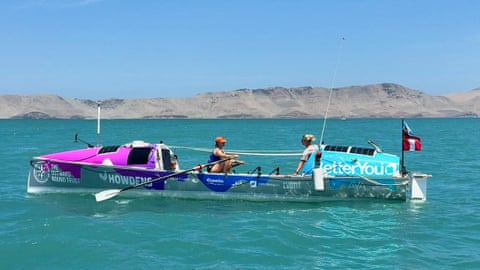
 Jess Rowe and Miriam Payne, who are rowing in their nine-metre long boat across the Pacific Ocean from Peru to Australia

The pair say they are keen for a “long-awaited pizza” when they arrive at Cairns Marlin Marina, which is expected to be any time between noon and 2pm AEST on Saturday. There, they will face the next physical challenge of regaining their “land legs”.

Their final approach to Queensland, Australia is proving as challenging as the crossing. Originally bound for Brisbane, stubborn headwinds forced a course change in August.

They are now navigating a new route, requiring guidance from Cairns fisher Alec Dunn, to weave through islands and the Great Barrier Reef.
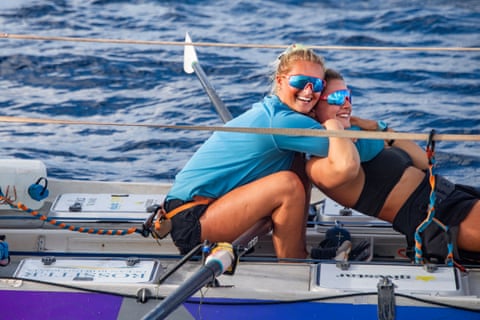

 The British rowers share a hug in their vessel named ‘Velocity’ on 17 October, 2025.

Buoyed by letters from schoolchildren in their final approach, the duo credit their success to “stubborn determination from start to finish” during their time “spent in the wild in our teeny tiny rowing boat”.

But for British women Jess Rowe, 28, and Miriam Payne, 25, the blisters and salt sores are all just part of the adventure of a lifetime, as they row from South America to Australia in their 9 metre vessel, Velocity.

The aptly named Rowe and Payne are now approaching [ed: they finished this morning in Australia!] the finish line of what has been at times a torturous journey, with the pair expected to arrive in the city of Cairns in tropical far north Queensland at about midday local time on Saturday.

“Mother Nature has been utterly brutal at times but ultimately, she let us pass and we have loved our time living at sea,” Rowe and Payne tell the Guardian.
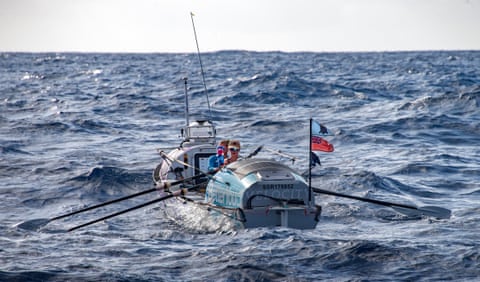
 Rowe (L) and Payne approach the Great Barrier Reef

The pair pushed off from Lima, Peru, in May after an initial April attempt was cut short by rudder failure. Since their successful relaunch, they have rowed with calloused hands around the clock, averaging 50 nautical miles daily. By the end of their trip they will have rowed an estimated 8,300 nautical miles (15,300 km) while raising money for the Outward Bound Trust.

Their survival kit includes 400kg of food, 80% of it freeze-dried, “salty” the water desalinator, “dumpy” the loo bucket and, when a critical pipe failed, a pair of cut up underwear for repairs. A supply of leaves and micro greens are also harvested from an onboard growing unit, and occasionally they catch a fish on the line.

From a cramped rowing station (also know as “the office”), they have faced down 30ft waves, navigated shipping lanes and battled storms that silenced their electronics. They have persisted under star-filled skies and had close encounters with sharks, whales, dolphins, turtles, sea lions and birdlife.

The sun is a crucial ally, providing energy via solar panels. A system fault that led to the onboard solar-powered batteries discharging too quickly was a critical challenge. 

Overnight, they switch out every two hours, sleeping in shifts inside their small cabin while the other rows, using lightweight towels for bedding.

Nick Rowe, Jess’s dad, says they have to be extremely cautious with power, especially since the electrical systems run their vital water generator.

For much of the journey, the rowers had to switch off most other electronics due to the battery failure, including the chartplotter – a navigation device – and the beacon that alerts passing ships. This turned their rowboat into a “ghost ship,” adding constant manual navigation and lookout to their already exhausting schedule.

Once settled in Cairns, they want to invite children to visit them in the local marina for tours and hear “tales of the high seas”.

                                                          ~~~~~~~~~~~~~

What an amazing accomplishment - though why someone would do that quite escapes me! But they made it this morning, arriving in Cairns in the dark to a richly deserved welcome from thousands of fans. As mentioned in the body of the post, they were raising money for a cause, Outward Bound Trust. Their initial goal was $50,000 but they raised it twice, bringing in, at the end, nearly $100,000! Well done, ladies. You are toughed than most of us!

Until next time, stay safe.

                                                  Fair winds,

                                                             Old Salt 


Thursday, October 2, 2025

TITANIC SISTERSHIP ARTIFACTS RECOVERED

 2 October 2025: Can't believe it's October already! 2025 is winding down and we're still trying to figure out where July went! And, as a somewhat self-serving followup to a comment we made in the last post - Maritime Maunder is now at 305,000 readers.... must be the cool weather is making more people stay in and look at the internet! For today, we have an interesting piece from "Allthatisinteresting.com" about the HMHS (His Majesty's Hospital Ship) Britannic,  the sister to the ill-fated Titanic. 

                                  ~~~~~~~~~~~~~~~~


 Divers have pulled artifacts from the wreck of the HMHS Britannic for the first time ever, and they include everything from silver-plated first-class trays and ceramic tiles from a Turkish bath to the ship's lookout bell and one of its navigation lamps.

At the turn of the 20th century, the White Star Line produced three Olympic-class passenger liners, the Titanic, the Olympic, and the Britannic, each meant to astound the world with their size and luxury. However, both the Titanic and the Britannic would tragically sink shortly after they were launched.

And while the wreck of the Titanic has been carefully documented in the years since, it’s only now that divers have recovered artifacts from the wreck of the Britannic for the first time. Though the Britannic is far less known than its sister ship, these artifacts are a chilling reminder that it likewise met a tragic end.

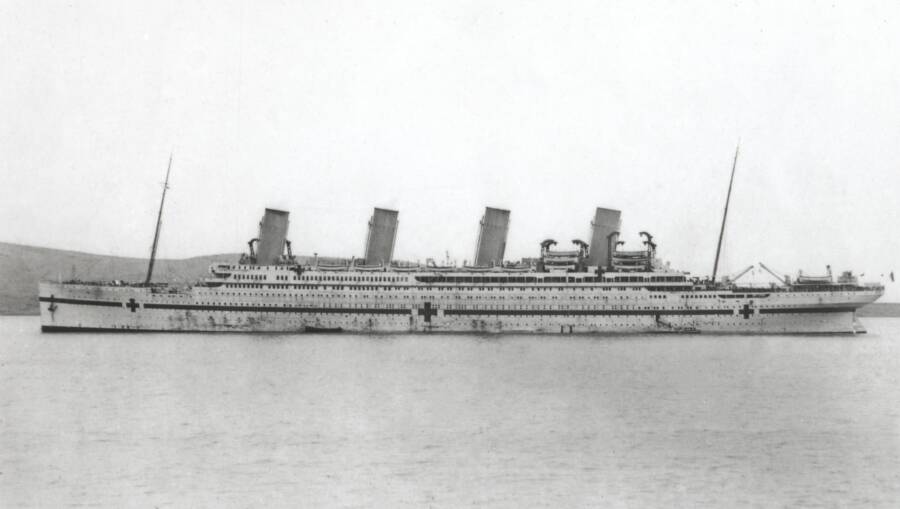
HMHS Britannic
Britannic shortly before her demise

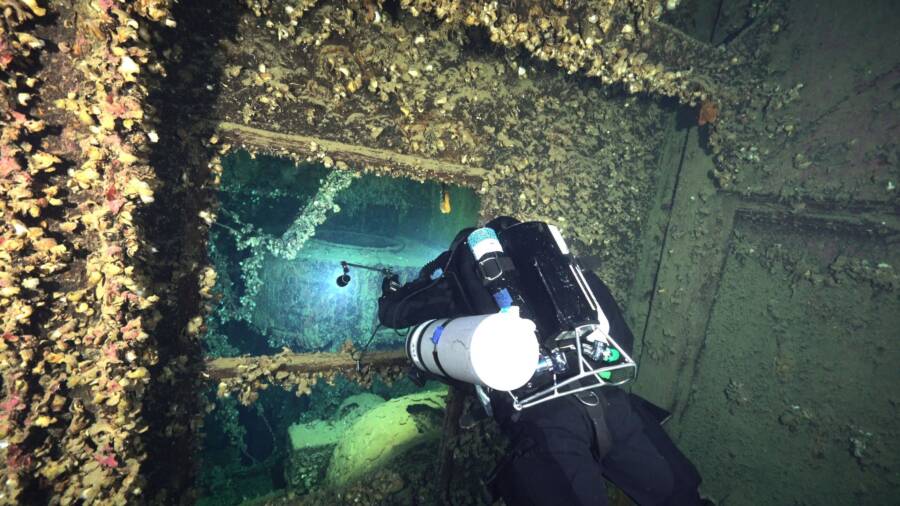
 According to a statement from the Greek Ministry of Culture, an 11-member diving team visited the site of the Britannic shipwreck, off the island of Kea in the Aegean Sea, in May 2025. The extreme depth of the wreck — roughly 400 feet — required deep-sea divers using closed-circuit rebreather equipment.

 Diver Exploring Britannic Wreck

Armed with this technology, the divers were able to plunge to the final resting place of the Britannic, which sank in 1916. Divers then explored the wreck of the doomed ship and recovered a number of artifacts that had been sitting on the seafloor for more than a century.

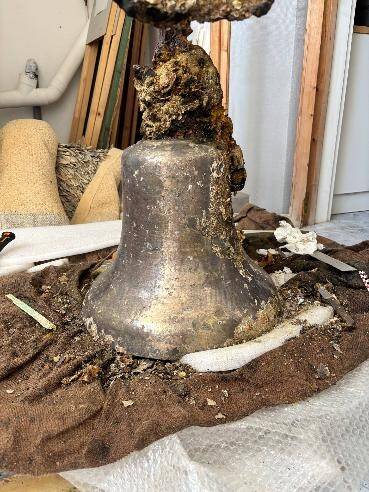
 Britannic Artifact Recovered

These artifacts include the ship’s observation bell, its navigation lamp, ceramic tiles from a Turkish bath, and a pair of binoculars.

The Greek Ministry of Culture said that these artifacts will be transported to the National Museum of Underwater Antiquities — still under construction — in Piraeus, where they’ll be part of an exhibit on World War I. [ed: seems like they should be in a maritime museum (Greenwich?) in England, not Greece.]

Officials hope that these artifacts will be able to help tell the story of the Britannic. Though its sinking is far less known than that of the Titanic, it’s undoubtedly tragic in its own way.

Like the Titanic and the Olympic, the Britannic was built by Harland and Wolff in Belfast, Ireland, and was designed to be a luxury vessel for transatlantic voyages. In fact, when construction on the Britannic began in November 1911, the ship was planned to be even bigger and more luxurious than its sister ships. But when the Titanic sank in April 1912, the Britannic was redesigned to include more safety features, including more lifeboats and watertight compartments.

The ship was launched on February 26, 1914 — almost two years after the Titanic hit an iceberg — and was initially meant for commercial service. However, when World War I began in 1914, the Britannic became a hospital ship — the HM Hospital Ship Britannic, or HMHS Britannic.

Then, on November 21, 1916, the Britannic was in the Aegean Sea heading toward the island of Lemnos when it struck a German mine and began to sink about 45 miles southeast of Athens. Unlike the Titanic, which had a stunningly high death count, just 30 of the 1,060 Britannic passengers and crew were killed. But they died in an especially terrible way, as their lifeboats were sucked into the ship’s enormous, still-spinning propellers as they tried to escape.

One of the survivors, a woman named Violet Jessop, happened to have also survived the sinking of the Titanic four years earlier. She had even been aboard the third sister ship, the Olympic, when it almost sank after colliding with another ship near the Isle of Wight in 1911.[ed: maybe she was bad luck!]

Like the wreck of the Titanic, which wasn’t discovered until 1985, it took decades to locate the wreck of the Britannic. It was finally found in 1975 by the famed French oceanographer Jacques Cousteau.

Now, with artifacts recovered from the Britannic for the first time, another chapter in its story is complete. Items like the bell, the binoculars, and the ceramic tiles offer a vivid look at what life was like aboard this doomed ship just before it went down.[ed: I am sure life was a lot less thrilling after it went down!]

                                                  ~~~~~~~~~~~~`

Sorry for the editorial levity, but sometimes these comments seem to write themselves! But nonetheless, an interesting story and one heretofore unknown to this scribe. And I promise next time we won't post about shipwrecks, treasure, or disasters!

Until next time, stay safe.

                                          Fair Winds,

                                                Old Salt